
The working average for a UK wedding in 2026 sits between £20,604 and £21,990, depending on which report you check. That figure typically excludes the honeymoon and engagement ring, so your actual outlay could run higher once those are added. The median couple spends less than this headline number suggests, and guest count remains the single biggest lever on your final bill.
TL;DR:
- Most UK couples in 2026 plan to spend between £20,000 and £22,000 on their wedding, excluding honeymoon and engagement ring costs.
- Guest count heavily influences total costs, with increasing guests raising expenses by around £272 per person, and London venues being 30 to 50% more expensive than elsewhere.
- Major budget drivers include venue and catering, which typically take up nearly half of the total, while flowers, entertainment, and attire vary based on style and season.
- Controlling guest numbers, choosing off-peak dates, and bundling ceremony and reception in one venue can significantly reduce overall expenses.
- Building a wedding budget requires prioritizing venue, guest list, and catering first, with a 10% contingency, to avoid overspending and unexpected costs.
Table of Contents
- What is the average cost of a wedding, according to the main reports?
- What does a typical wedding cost, item by item?
- What drives your wedding budget up or down?
- What is a reasonable budget for a wedding at different levels?
- How can you spend less without losing what matters?
- How does a planner actually build a wedding budget?
- How often do couples go over budget, and by how much?
- Have wedding costs actually risen, or are priorities shifting?
- Do costs differ by wedding style: traditional, informal, or destination?
- What hidden costs catch couples out?
- Does age or income change what couples typically spend?
- Using averages as a starting point, not a target
- How Winelands Function helps you build a budget that holds
- Sources
- FAQ
What is the average cost of a wedding, according to the main reports?
Two surveys dominate this conversation, and their numbers sit close enough to trust but far enough apart to cause confusion. Bridebook’s 2026 UK Wedding Report puts the average at £20,604, drawn from a sample of roughly 7,000 couples. That figure covers wedding day expenses only and leaves out the honeymoon and engagement ring entirely.
Hitched’s 2026 industry report reports a higher £21,990, based on around 2,020 newlyweds surveyed. Hitched also tracks an average cost per guest of roughly £272, which points to a “quality over quantity” trend, smaller guest lists with higher per-head spending rather than the reverse.
Why the £1,386 gap? WeddingsHub’s analysis reconciles the two and lands on a working range of roughly £20,000 to £22,000. The difference comes down to sample size, survey timing, and what each report chooses to count as a “wedding cost” rather than any real disagreement about market prices.
A few things worth holding onto when you pick your own planning number:
- Bridebook (£20,604): larger sample, day-only costs, excludes ring and honeymoon.
- Hitched (£21,990): smaller sample, includes per-guest cost tracking, reflects rising spend per head.
- Working range: £20,000 to £22,000 is the sensible planning band for most couples.
Statistic to remember: adding the engagement ring and honeymoon on top of the wedding day itself typically raises the headline figure by several thousand pounds, so budget those separately rather than assuming they’re baked into the average you’ve read.
What does a typical wedding cost, item by item?
Venue and catering swallow the largest share of any wedding budget, typically 45 to 50% of the total spend. If your overall budget sits at £21,000, that means £9,450 to £10,500 goes on the room and the meal before you’ve booked a single flower or photographer.
Here’s how the rest of a typical UK wedding budget tends to break down:
- Venue and catering: 45–50% of total budget, the largest single line item.
- Photography and videography: commonly £1,500–£3,000 combined, more for full-day coverage with a second shooter.
- Wedding dress: ranges widely, with MoneySavingExpert noting many brides spend far less than boutique list prices suggest through sample sales and pre-loved options.
- Rings: the wedding bands themselves usually sit outside the headline average, alongside the engagement ring.
- Hair and makeup: typically £150–£400 depending on trials and bridal party numbers.
- Flowers: costs swing enormously by season and style, from a few hundred pounds for simple arrangements to several thousand for elaborate installations.
- Entertainment: bands and DJs commonly range from £600 to £2,000 depending on set length and reputation.
- Drinks and transport: often underestimated; corkage, welcome drinks, and cars add up quickly.
Pro Tip: Ask every supplier quote to specify exactly what’s included per guest and per hour. A “package” price hides a lot of assumptions that only surface once you’re comparing three quotes side by side.
Flowers and entertainment vary the most by personal style choice, while venue and catering vary most by guest count, the two are connected but driven by different decisions.
What drives your wedding budget up or down?
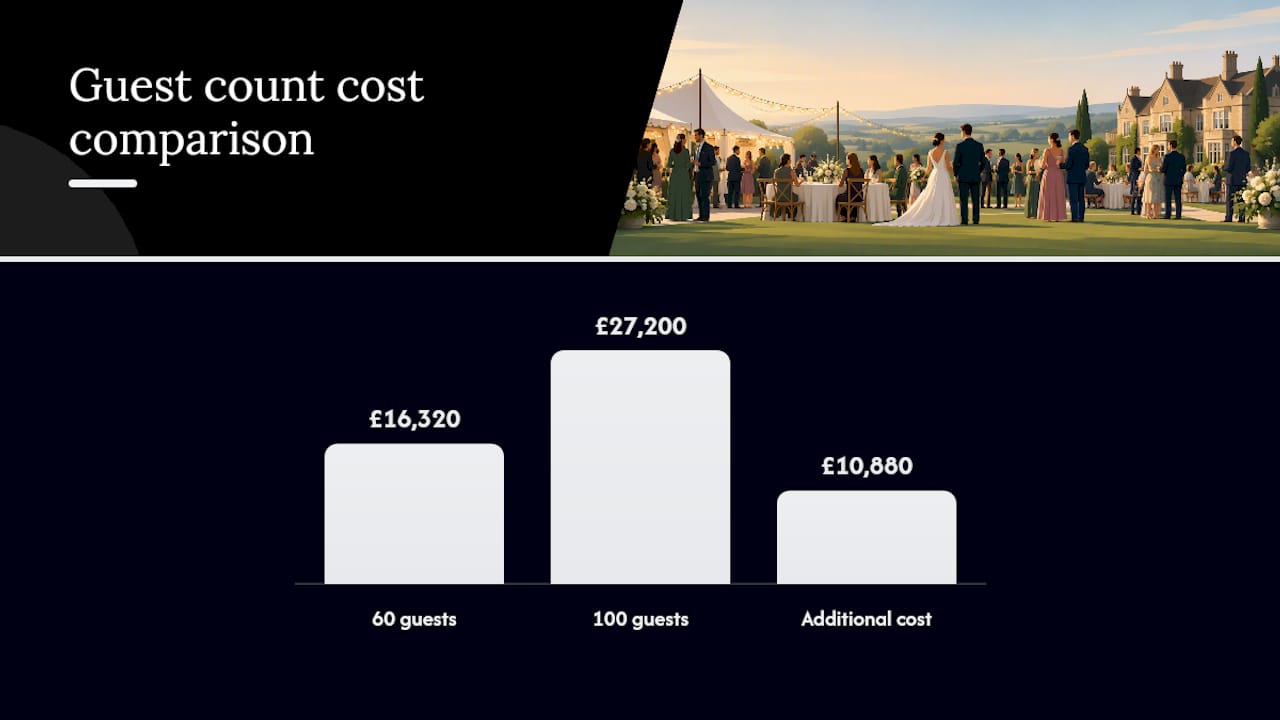
Guest count is the lever you control most directly, and it moves the needle harder than almost anything else. At an average cost per guest of around £272, the jump from 60 to 100 guests adds roughly £10,880 to your total, without changing venue, dress, or photographer at all.
Region matters just as much, if less obviously. London weddings routinely run 30 to 50% higher than the national average, driven by venue hire rates and supplier day fees rather than anything intrinsic to the celebration itself. Choosing a venue an hour outside the capital, or holding your celebration somewhere like the Cape Winelands, can preserve a similar look and feel for considerably less.
Timing is the third major driver, and it’s the one most couples overlook until they’re deep into venue quotes:
- Peak season (May to September, Saturdays): highest venue rates, least negotiating room.
- Off-peak or midweek dates: savings of 20 to 40% on venue hire alone.
- Single-day vs multi-day: a destination wedding spread across a long weekend adds accommodation and transport costs for guests and hosts alike.
Pro Tip: If your heart is set on a particular venue, ask for their off-peak calendar before you ask for pricing. Many venues will quietly discount a Thursday in February by far more than they’ll ever advertise.
Style choices, from a strictly traditional service to a relaxed destination celebration, layer on top of these three drivers rather than replacing them.
What is a reasonable budget for a wedding at different levels?
Averages are one thing; your own budget is another. Three scenarios cover most couples planning in 2026.
- Under £10,000: A registry office ceremony, a small venue for 30 to 40 guests, and a simpler catering style. Around 25% of couples spend at this level, usually by trimming guest numbers and choosing a venue that doubles as the reception space.
- £10,000 to £30,000 (the typical range): This covers most UK weddings, usually 60 to 120 guests. A common allocation is 45–50% on venue and catering, 15% on photography and entertainment combined, 10% on attire, and the rest split across flowers, stationery, and transport.
- £40,000 and above (luxury): Around 10% of couples reach this level, usually driven by larger guest lists, premium venues, multi-day celebrations, or destination logistics. Extras like live bands, elaborate florals, and bespoke styling inflate this figure fast.
Two worked examples make the maths concrete. At 50 guests and an average per-guest cost of £272, catering and venue alone reach roughly £13,600, leaving the balance of a £20,000 to £22,000 budget for everything else. At 100 guests, that same per-guest figure pushes catering and venue to around £27,200 on its own, which explains why couples with larger guest lists routinely land in the luxury bracket even with modest styling choices.
How can you spend less without losing what matters?
The guest list is the fastest lever to pull, and it’s the one most couples resist pulling first. Cutting from 100 to 70 guests can save several thousand pounds in catering alone, without touching venue, dress, or photographer budgets at all.
Date and venue choices come next. A registry office ceremony, a local hall, or an off-peak weekday date each shave meaningful percentages off your total, and bundling ceremony and reception in one venue removes a transport cost entirely. Ask every supplier directly about package inclusions, corkage fees, and minimum spends before you sign; these hidden clauses are where quotes quietly balloon.
- Trim the guest list before you trim the flowers; it moves more money per decision.
- Book off-peak or midweek where your circle can flex around the date.
- Source seasonal flowers locally rather than importing blooms out of season.
- Ask suppliers directly about corkage, minimum spends, and package inclusions before booking.
DIY decor and flowers save money in theory, but only if you have the time, skill, and helpers to execute them well; a rushed DIY centrepiece that looks amateurish often costs more in stress than it saves in cash. For budget-friendly decor ideas that don’t sacrifice polish, and further tactics for cutting costs without cutting the joy, start with the elements guests actually notice: lighting, seating comfort, and food quality.
Pro Tip: Negotiate catering minimums before venue deposits, not after. Once you’ve paid a deposit, your leverage to renegotiate guest minimums disappears.
How does a planner actually build a wedding budget?
Professional planners rarely start with a headline average. They start with a fixed order of decisions: venue first, because it locks your date and guest cap; then the final guest list; then catering, which is usually contracted to the venue or a preferred supplier; then photography and entertainment; and only then the discretionary extras like florals and favours.
Planners also run a standard set of questions at the first briefing, and these are worth asking yourself even without one in the room:
- Who is paying, and does that affect who has final say on spend?
- What are the two or three non-negotiable elements, the things you’d cut your guest list before sacrificing?
- Which suppliers require holdback deposits, and when are final balances due?
- Is there a 10% contingency built in before any deposits are paid?
Planners generally set that contingency at 10% as standard practice, treating it as part of the working budget rather than an optional extra. This ordering, and the discipline behind it, is one reason a wedding planner’s fee often pays for itself in avoided overspend.
How often do couples go over budget, and by how much?
More than half of couples report spending beyond their original budget, which is why the 10% contingency isn’t a nicety, it’s the difference between a comfortable final month and a stressful one. Industry commentary tied to Hitched’s 2026 figures recommends building that buffer in from the very first deposit, not adding it later once costs have already crept.
Overspend tends to cluster around a few predictable categories: florals expanding beyond the original brief, bar tabs running higher than estimated headcounts suggested, and last-minute additions like extra hire items or upgraded transport. None of these are dramatic individually. Stacked together across a six-to-twelve-month planning window, they’re exactly how a £21,000 plan becomes a £24,000 final bill.
The practical fix isn’t cutting your ambitions; it’s sequencing your commitments. Lock in venue and catering, your two largest and least flexible costs, before you finalise anything discretionary. That way, if your contingency does get eaten into, it happens on a flower order rather than a catering minimum you can’t renegotiate. Get itemised quotes early enough that you can compare suppliers properly, rather than accepting the first number because the wedding date is approaching.
Treating the 10% buffer as untouchable until the final month, rather than a soft target, is what separates couples who finish on budget from the majority who don’t.
Have wedding costs actually risen, or are priorities shifting?
Headline averages have stayed relatively stable year on year, but that stability masks a real shift underneath. Couples are increasingly choosing fewer guests and spending more per head, which explains why the per-guest figure of £272 keeps climbing even as the overall average holds roughly steady.
This “quality over quantity” pattern shows up most clearly in catering and photography. Couples cutting their guest list from 120 to 70 often reinvest that saved money into a better meal, a second photographer, or a more elaborate reception setup, rather than banking the difference. The wedding looks smaller on paper but often feels more considered in person.
Inflation on individual line items, particularly catering, florals, and venue hire, has pushed per-unit costs up across the board. What’s kept the headline average from spiking accordingly is this guest-list discipline: fewer heads to feed absorbs some of the per-item inflation. It’s worth noting for your own planning that a budget built on last year’s per-guest figures may already be out of date by the time your wedding date arrives, particularly for catering and florals booked closer to the event.
Do costs differ by wedding style: traditional, informal, or destination?
A traditional church wedding with a formal seated reception sits closest to the headline average, largely because it includes every conventional line item: ceremony venue, reception venue, formal catering, a full bridal party, and traditional stationery. This is the format most survey respondents describe, which is part of why £20,000 to £22,000 remains the anchor figure.
Informal weddings, think marquee gatherings, garden parties, or registry office ceremonies followed by a relaxed meal, tend to land below that average. Savings come from simpler catering formats (buffet or grazing tables rather than plated service), less formal florals, and often a single combined venue for ceremony and reception.
Destination weddings sit at the opposite end and are genuinely harder to average, because the figure depends entirely on location and guest travel arrangements. Couples hosting abroad, in a region like the Cape Winelands, often find that venue and catering costs are more favourable than equivalent UK venues, even once flights and accommodation coordination are factored in. The trade-off is smaller guest lists, since travel costs naturally filter attendance, which circles back to the same “fewer guests, better spend per head” pattern seen across the wider market. A step-by-step destination wedding checklist helps map that timeline properly.

What hidden costs catch couples out?
Beyond the headline items sits a second layer of costs that rarely appear in survey averages but consistently appear on final invoices. Alterations are the most common surprise: a dress bought off the rack almost always needs tailoring, and bridal boutiques often quote alteration fees separately from the dress price itself.
Groom and bridal party attire is another frequently underestimated line. Suit hire or purchase for the groom and groomsmen, plus bridesmaid dresses, can add a meaningful sum once multiplied across a full wedding party, particularly if the couple is covering these costs rather than asking each member to pay their own way.
Gratuities for suppliers, caterers, drivers, and coordinators, are customary in many circumstances but easy to forget when building an initial budget. Corkage fees at venues that allow you to bring your own alcohol can also erode savings you thought you’d banked by sourcing drinks independently.
A few line items worth budgeting for explicitly rather than assuming they’re covered elsewhere:
- Dress and suit alterations, often quoted separately from purchase price.
- Bridal party attire, if the couple is covering costs.
- Supplier gratuities and service charges.
- Corkage or venue “bring your own” fees.
- Postage for invitations and thank-you cards.
None of these individually break a budget. Collectively, unbudgeted, they’re a common source of the overspend statistics discussed earlier.
Does age or income change what couples typically spend?
Couples marrying later, often with more established careers and savings, tend to have larger discretionary budgets and are more likely to self-fund rather than rely on family contributions. This shifts spending patterns towards guest experience upgrades: better catering, live entertainment, and photography packages with additional coverage hours.
Younger couples marrying earlier in their careers more frequently combine personal savings with family contributions, which can mean more people have a say in budget decisions, sometimes creating the negotiating friction planners are used to navigating. This demographic also shows up more often in the sub £10,000 scenario, prioritising getting married over a larger celebration.
Income bracket predictably correlates with which end of the £20,000 to £22,000 range, or beyond it, a couple lands in, but it’s not a straightforward multiplier. Couples with higher household incomes don’t always spend proportionally more; many choose to redirect savings towards a house deposit or honeymoon instead, keeping the wedding itself closer to the median. The couples most likely to exceed £40,000 tend to be blending a larger guest list, typically extended family networks, with a premium venue choice, rather than income alone driving the figure up.
Using averages as a starting point, not a target
Headline averages are useful for setting expectations, but they’re a poor tool for building your actual budget. The median spend sits meaningfully below the mean, because a relatively small number of high spenders pull the average upward. If your plans look more modest than £21,000, you’re closer to typical than the headline figure suggests.
Build from a scenario that matches your guest count and priorities, then add the 10% contingency before you book anything. Get itemised quotes early, not late, so you can compare suppliers on the same terms rather than accepting the first number under time pressure. And revisit your priority list once real quotes come in; the venue you loved on paper might cost what you’d rather spend on catering and photography combined.
— Coert
How Winelands Function helps you build a budget that holds
Professional event planners offer an alternative to guessing your way through supplier quotes and hoping the contingency stretches far enough. Where the averages and scenarios above give you a starting range, our planners work from your actual guest list and priorities to build a budget that’s realistic before you sign a single deposit, rather than discovering the gaps three months in.

Our Full Wedding Planning service covers exactly the ordering a professional planner follows: venue and guest list first, catering and photography next, then the discretionary extras that make a celebration feel personal rather than generic. If you’re weighing a destination celebration in the Cape Winelands against a traditional UK format, that comparison is easier with someone experienced in both scenarios.
If you’d like a straightforward conversation about what your own numbers could look like, get in touch through our wedding planning page and we’ll talk through a bespoke budget based on your guest count, style, and date, no obligation, just clarity before you commit to anything.
Sources
- How Much Does a Wedding Cost? Average Wedding Cost UK: £20604 in 2026
- Hitched
- UK Wedding Cost 2026: Hitched vs Bridebook Compared | Weddings Hub
- UK wedding cost and vendor data (industry report) – Videouk
FAQ
What is a realistic budget for a wedding in the UK?
A realistic working budget sits between £20,000 and £22,000, based on the Bridebook and Hitched headline averages. Your actual figure depends heavily on guest count and region, so treat this range as a starting point rather than a fixed target.
What is a good budget for a wedding?
A good budget is one built from your guest list and priorities, not the headline average alone. Most couples planning for 60 to 120 guests land within the £10,000 to £30,000 range that Bridebook identifies as typical, with venue and catering taking the largest share.
Can I do a wedding for £20,000?
Yes, £20,000 sits right at the current UK average, so a wedding at this level is entirely typical rather than a compromise. Keeping guest numbers in the 60 to 100 range, choosing an off-peak date, and bundling ceremony and reception in one venue all help the budget stretch further.
How much is a wedding for 100 people in the UK?
Using the average cost per guest of around £272, catering and venue alone for 100 guests reach roughly £27,200, before photography, attire, or entertainment. Total spend for a 100 guest wedding commonly falls into the £30,000 to £40,000 range once every category is included.