

A private celebration is an invitation-only event held in a venue not open to the public, with restricted access, a curated guest list, and a personalised experience designed entirely around the people who matter most. If you are weighing whether to go private, the verdict is straightforward: choose it whenever connection, atmosphere, and emotional depth matter more than scale.
At a glance:
- Private celebrations suit milestone moments, intimate dinners, micro-weddings, and solo occasions where you want full control over the environment.
- The core benefits are deeper connection, tailored logistics, and the psychological safety of a controlled social setting.
- Your immediate next step: define the purpose and draft your guest list before you book anything else.
Table of Contents
- What counts as a private celebration?
- Why do hosts choose private celebrations?
- The planning checklist you need before you book anything
- How does venue choice shape the feel of your event?
- Choosing a theme or format that suits the occasion
- Etiquette for invitations, RSVPs, and guest expectations
- UK legal and safety checks every host must make
- What drives the budget for a private celebration?
- How to host a solo or very small celebration with intention
- Making your celebration accessible and lower impact
- Planning timeline and a day-of run sheet
- Common problems and supplier red flags to watch for
- Key takeaways
- A planner’s perspective on keeping it intimate and emotionally rich
- Useful UK sources and supplier-search tips
What counts as a private celebration?
A private celebration is defined by four features: invitation-only attendance, exclusive use of the venue, a curated guest list, and tailored food or entertainment. What it is not is a public gathering or an open-door event.
Common types include:
- Intimate dinner (6–a small number of guests): a seated meal in a private dining room or home, built around conversation and a bespoke menu.
- Micro-wedding (a modest-sized guest list): a legally binding ceremony with a reception that prioritises meaning over spectacle.
- Milestone party (milestone birthdays and retirements): a themed evening for close family and friends, often in a hired private space.
- Private anniversary: a couples’ experience or small gathering to mark a significant year together.
- Solo celebration: a deliberate, self-directed occasion — a solo dinner, a day trip, or a personal ritual — chosen for reflection and autonomy.
Scale ranges from a single guest to approximately eighty guests before events cross into semi-public territory. Venue types span private estates, home entertaining spaces, boutique hotel private rooms, and dedicated hire venues.
Why do hosts choose private celebrations?
The most compelling reason is control. Event design experts argue that smaller, curated gatherings allow hosts to create a controlled emotional environment — one where atmosphere, pacing, and the people present can all be intentionally shaped.
Practically, private events are also easier to manage. Supplier briefings are simpler, dietary needs are easier to accommodate, and risk is lower when you know every guest personally. The value of intimate gatherings lies precisely in this: fewer variables, greater depth.
The mental-health dimension is worth naming directly. Psychology research distinguishes solitude (chosen) from loneliness (imposed). Celebrating privately or alone is often a deliberate, healthy act that supports reflection and personal autonomy — not a sign of isolation.
The planning checklist you need before you book anything
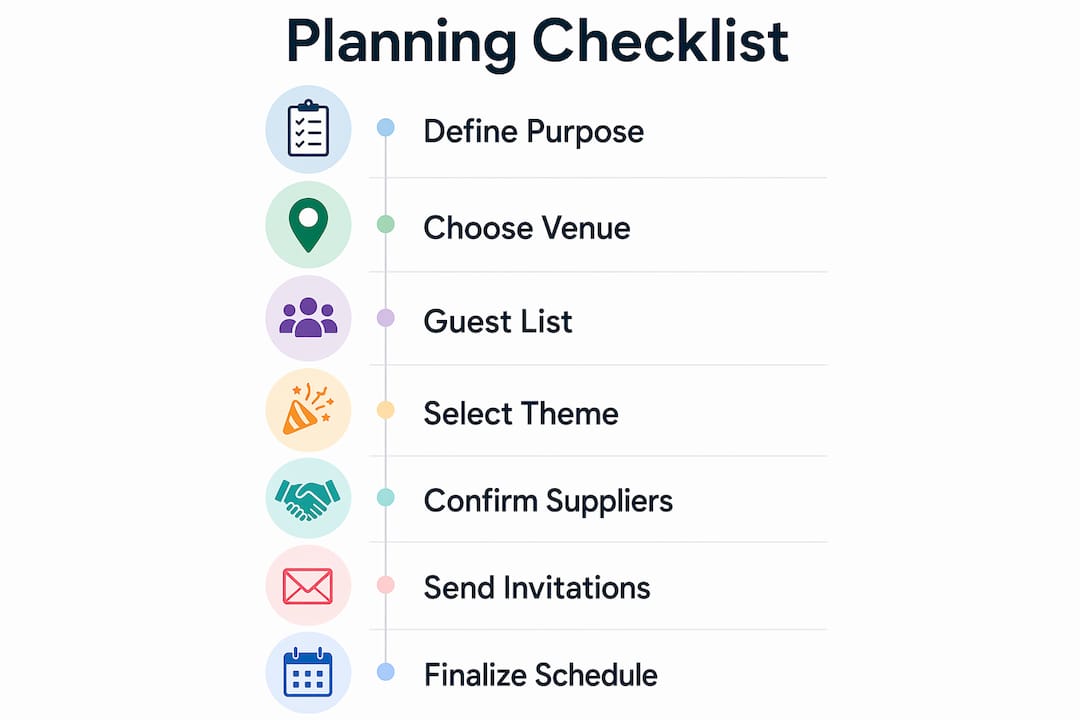
Smaller private celebrations often require a few weeks to coordinate suppliers; milestone events with bespoke elements benefit from several weeks. Start with this checklist:
- Clarify the purpose — what emotion or experience do you want guests to leave with?
- Draft the guest list — names first, numbers second.
- Set a top-line budget — total available spend before you approach any supplier.
- Choose a venue category — home, private estate, boutique hire room, or restaurant private dining.
- Shortlist suppliers — caterer, photographer, florist, entertainment.
- Confirm the date — cross-reference guest availability before locking in the venue.
Suggested milestones:
- 8–12 weeks out: venue booked, date confirmed.
- 6 weeks out: caterer and key suppliers contracted.
- 4 weeks out: invitations sent.
- 2 weeks out: final guest numbers confirmed.
- 48 hours out: run sheet shared with all suppliers.
Pro Tip: Prioritise the guest experience over decorative detail. A beautifully set table means little if the food is late or the flow feels rushed. Spend your planning energy on timing and hospitality first.
For a thorough operational checklist, the private celebration essentials list from Winelandsfunction covers every stage in detail.
How does venue choice shape the feel of your event?
Space is not neutral. Private event spaces give hosts the flexibility to shape flow and atmosphere, but they require deliberate choreography. Think of the venue as a living system: assign clear zones for arrival, mingling, dining, and unwinding, and plan the transitions between them.
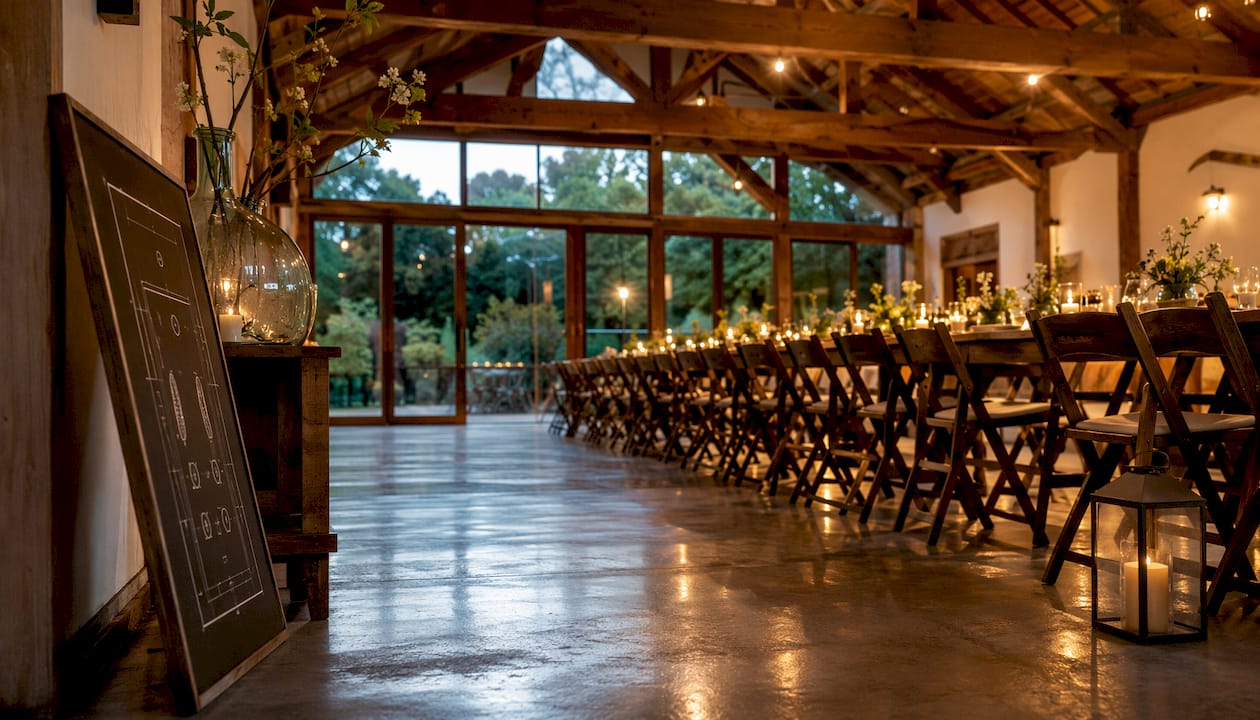
A private estate offers maximum flexibility and visual impact, but demands more logistical planning (catering infrastructure, parking, power). A home is warm and personal, though capacity and noise limits apply. A boutique hotel private dining room handles service and compliance for you, at the cost of some personalisation. Small hire venues sit in the middle: configurable, often licensed, and professionally managed.
Whichever you choose, check step-free access, parking availability, and proximity to public transport before you commit. These details affect whether every invited guest can actually attend comfortably.
Choosing a theme or format that suits the occasion
Format shapes atmosphere as much as décor does. The most effective options for private gatherings:
- Sit-down dinner: creates natural conversation flow; works for 6–30 guests.
- Cocktail reception: encourages mingling; suits milestone parties and anniversaries.
- Garden party: relaxed and photogenic, weather-dependent (see contingency planning below).
- Experience-led evening: a tasting menu, a private chef’s table, or a single-artist performance.
- Memory-centred format: built around shared history — photo timelines, curated playlists, personalised speeches.
Storytelling devices such as memory walls, curated soundtracks, and personalised interludes create emotional arcs that make a small gathering feel genuinely expansive. A playlist built from songs meaningful to the guest of honour costs nothing and lands harder than most floral arrangements.
Pro Tip: Ask each guest to contribute one song or one memory before the event. Weave these into the evening’s programme — it transforms guests from attendees into co-authors of the occasion.
For deeper inspiration on culinary experience design, a tasting menu structured around a narrative (a couple’s travel history, a family’s heritage cuisine) is one of the most memorable formats for intimate celebrations.
Etiquette for invitations, RSVPs, and guest expectations
Set expectations clearly from the outset. Invitation wording for private events should signal exclusivity without sounding exclusionary. Phrases such as “This is an intimate, invitation-only gathering” or “We are keeping the evening small and private” communicate the tone immediately.
On RSVPs: set a firm deadline and follow up once. State your plus-one policy explicitly in the invitation — silence on this point invites assumptions. A simple line such as “This invitation is for [Name] only” removes ambiguity without awkwardness.
Digital privacy deserves equal attention. Guests posting freely can erode the privacy of an event you have worked hard to protect. A short line in the invitation or on the day — “We’d love you to be present rather than posting — photos will be shared privately after the event” — sets the tone graciously. Private photo-sharing platforms with access codes give guests a place to share within the group without broadcasting publicly.
UK legal and safety checks every host must make
Private does not mean unregulated. Before your event, work through this checklist:
- Alcohol licensing: if you are serving alcohol at a venue not already licensed, check with your local council about a Temporary Event Notice (TEN). You can apply for up to 15 TENs per year as a personal licence holder.
- Capacity limits: confirm the venue’s maximum occupancy with the venue manager or fire safety officer.
- Noise restrictions: notify neighbours and check local authority noise curfews, particularly for outdoor events.
- Food hygiene: if using an external caterer, verify they are registered with the Food Standards Agency and hold a current hygiene rating.
- Public liability insurance: confirm your venue or caterer carries it; if hosting at home, check your home insurance covers events.
- HSE guidance: for events with temporary structures (marquees, staging), consult HSE guidance on safe installation.
This article provides general information only. Confirm current requirements with your local authority or a qualified professional before your event.
What drives the budget for a private celebration?
Venue hire and catering per-head costs account for the largest share of most private event budgets. Staffing, audio-visual equipment, entertainment, and décor follow.
Where to prioritise:
- Food and drink quality: guests remember what they ate and drank.
- Hosting and service: attentive, warm service elevates any space.
- Personalisation touches: a bespoke menu card or a curated playlist costs little but signals care.
| Budget category | Suggested allocation |
|---|---|
| Venue hire | a significant portion |
| Catering and drink | a large share |
| Staffing and service | a moderate portion |
| Entertainment and AV | a smaller amount |
| Décor and florals | a smaller amount |
| Contingency | a smaller amount |
Negotiate with suppliers by offering early payment or off-peak dates. Ask for itemised quotes so you can trim line items without losing the elements that matter most to your guests.
How to host a solo or very small celebration with intention
Choosing to celebrate alone or with just one or two people is a legitimate, psychologically healthy decision. Psychologists advise that the deciding factor between healthy solitude and harmful loneliness is intentionality: when the choice is yours, the experience is restorative rather than isolating.
Practical solo celebration ideas include a private chef’s dinner for one, a day trip to somewhere personally meaningful, a journalling ritual, or a curated evening of music and food you love. Tell one trusted person your plans and check in with them afterwards — not because solo celebrations are risky, but because sharing the intention makes it feel more real.
When communicating your choice to friends or family, a simple “I’m marking it quietly this year — it’s what I need” is enough. You owe no one a detailed explanation.
Making your celebration accessible and lower impact
Accessibility and sustainability are not afterthoughts. Build them into the planning stage.
Accessibility checklist:
- Confirm step-free access to all areas guests will use.
- Collect dietary requirements with the RSVP, not on the day.
- Consider hearing loop availability if any guest needs it.
- Provide clear transport and parking information in advance.
Lower-impact choices:
- Choose a seasonal menu — it reduces food miles and often tastes better.
- Avoid single-use plastics for tableware and favours.
- Source flowers and décor from local suppliers.
- Opt for digital invitations where guests are comfortable with them.
The savings from cutting unnecessary single-use items can be redirected to food quality or a personal touch that guests will actually remember.
Planning timeline and a day-of run sheet
Milestone timeline:
- 8–12 weeks out: confirm purpose, guest list, venue, and date.
- 6 weeks out: contract caterer, photographer, and entertainment.
- 4 weeks out: send invitations with RSVP deadline.
- 2 weeks out: finalise numbers, share dietary requirements with caterer.
- 48 hours out: distribute run sheet to all suppliers and a trusted guest.
- Day of: walk the venue before guests arrive; confirm supplier arrival times.
Sample day-of run sheet:
- 14:00 — Supplier access and set-up begins.
- 17:30 — Host arrives for final walk-through.
- 18:30 — Guest arrival and welcome drinks.
- 19:30 — Guests seated; first course served.
- 21:00 — Speeches or toasts.
- 21:30 — Dessert and informal conversation.
- 23:00 — Pack-down begins; guests depart.
Share the run sheet with your caterer, venue manager, and one reliable guest who can field questions if you are occupied. The VIP event essentials guide from Winelandsfunction offers a more detailed operational template for complex events.
Common problems and supplier red flags to watch for
Most day-of problems are predictable. Address them in advance.
Typical challenges and quick fixes:
- Last-minute cancellations: keep a short reserve list for milestone events; for small dinners, adjust seating rather than scrambling to fill seats.
- No-shows: confirm attendance 48 hours before; caterers can usually adjust numbers within 24 hours.
- Bad weather for outdoor events: always have an indoor fallback or a marquee option confirmed before the event date.
- Late supplier arrivals: build a 30-minute buffer into your run sheet for every key supplier.
Supplier red flags:
- Vague or verbal-only contracts with no written terms.
- Reluctance to provide proof of public liability insurance.
- Poor communication in the weeks before the event.
- No references or portfolio from comparable events.
Ask every supplier for a written contract, proof of insurance, and at least two references before you pay a deposit.
Key takeaways
A private celebration succeeds when purpose, guest experience, and logistics are planned in that order — with UK compliance and contingency built in from the start.
| Point | Details |
|---|---|
| Define purpose first | Clarify the emotional outcome you want before choosing a venue or theme. |
| Guest list drives everything | Numbers determine venue, catering costs, and the intimacy of the atmosphere. |
| UK compliance is non-negotiable | Check alcohol licensing, food hygiene registration, and public liability insurance before the event. |
| Intentionality matters | Whether celebrating with 30 guests or alone, a chosen, deliberate celebration is psychologically healthy. |
| Budget for experience, not décor | Allocate a large share to catering and drink; cut from florals and favours before cutting from food or service. |
A planner’s perspective on keeping it intimate and emotionally rich
The most common mistake hosts make is treating a private celebration as a smaller version of a large party. It is not. A private event has a completely different logic: the intimacy is the point, and every decision should serve it.
Pace the evening deliberately. A sit-down dinner that moves too quickly through courses leaves guests feeling processed rather than hosted. Build in pauses — a moment after the main course before dessert, a natural break for guests to move and talk. The unhurried feeling is what people remember.
Storytelling is the most underused tool in private event planning. A memory wall, a personalised playlist, or a single speech that tells a real story about the guest of honour does more for the atmosphere than any floral installation. If you are working with a professional planner, brief them on the relationships in the room, not just the logistics. The best bespoke celebration planning starts with understanding the people, not the budget.
Know when to outsource. Day-of coordination is the task most hosts underestimate. If you are the host, you cannot also be the logistics manager. Handing the run sheet to a professional — even for a small event — frees you to be present with your guests, which is the whole point.
Planning a private celebration and want expert support from conception to the final toast? Winelandsfunction specialises in bespoke luxury celebrations — from intimate dinners to milestone events — with meticulous attention to every detail. Explore the full event planning step by step service to begin your planning with confidence.
Useful UK sources and supplier-search tips
Official signposts:
- Local council licensing: search your council’s website for Temporary Event Notices and premises licence requirements.
- Food Standards Agency (food.gov.uk): verify caterer hygiene ratings and food business registration.
- Health and Safety Executive (hse.gov.uk): guidance on temporary structures, crowd management, and event safety.
Finding and vetting suppliers:
- Ask for a written contract with clear cancellation and refund terms before paying any deposit.
- Request proof of public liability insurance — minimum £1 million cover is standard for most private event suppliers.
- Ask for two references from events of comparable size and style.
- For boutique venues, visit in person and ask about noise restrictions, parking, and their preferred supplier list.
- For guest experience design guidance, hospitality-focused resources can help you think through service flow and welcome sequences before you brief your team.
Start locally: regional wedding and events directories, local council approved-supplier lists, and personal recommendations from people whose events you have attended are consistently the most reliable starting points.
Recommended
- Private celebration essentials list: your complete guide – Winelands Function – For Every Occasion, Your Celebration
- Exploring Tips for Bespoke Celebrations: A Comprehensive Guide – Winelands Function – For Every Occasion, Your Celebration
- What is an intimate celebration? a personal guide – Winelands Function – For Every Occasion, Your Celebration
- Complete Guide to Bespoke Celebration Planning – Winelands Function – For Every Occasion, Your Celebration