

A luxury event coordinator is your creative director, production lead, and personal concierge, rolled into a single point of accountability. Where a standard planner books vendors and manages a run sheet, a luxury coordinator designs the entire experience from first principles and then engineers the production behind it, whether that means a custom kitchen build in a vineyard, or a five‑day guest itinerary for 200 international arrivals.
The time commitment tells you most of the story. Luxury planners often log many hours per event, and staffing ratios at the top end are often quite high, ensuring close guest to service staff attention. That density of attention is what separates a beautifully organised event from one that feels effortless to every person who walks through the door.
You commission this level of service when your event has genuine complexity: a raw or remote venue, a multi‑day guest programme, cultural or religious elements that need precision, or a brand launch where every visual detail carries commercial weight. Winelands Function, based in Cape Town, works exclusively at this level, providing bespoke, full‑service coordination for private clients and organisations who need the whole production held by one accountable team.
What you’re actually buying:
- A single creative vision carried from concept through to the final guest departure.
- Production capability for spaces that have no existing infrastructure.
- A concierge layer that manages guests as carefully as it manages vendors.
- One point of accountability, rather than a patchwork of freelancers you coordinate yourself.
Key Takeaways
A luxury event coordinator functions as creative director, production lead and concierge in one accountable role, and choosing well depends on verifiable proof, not polished photographs.
| Point | Details |
|---|---|
| Insist on lead continuity | Confirm your first point of contact stays your lead through design and delivery. |
| Separate fee from production budget | Request itemised production costs with disclosed contingency and vendor mark‑ups. |
| Brief early and honestly | Share your budget band and non‑negotiables in the first conversation, not later. |
| Verify proof properly | Ask for named contacts in case studies and speak to references with similar scope. |
| Start with Winelands Function | Book a discovery call to get a scoped proposal with a clear production timeline. |
Table of Contents
- Duties and responsibilities of an event coordinator at the luxury level
- How long does hiring a luxury event coordinator take from enquiry to wrap?
- Who is actually on your team, and who is accountable?
- What does a luxury event coordinator cost, and where do fees hide?
- How do you choose the right coordinator and spot warning signs?
- What proof should you actually trust from a luxury coordinator?
- What do you need to send before requesting a proposal?
- A coordinator’s note on getting the most from your planner
- How to start working with Winelands Function
- Where to read further and see the work
- Sources
Duties and responsibilities of an event coordinator at the luxury level
The job title sounds the same as a standard planner’s, but the deliverables are not. A luxury coordinator’s responsibilities span four distinct disciplines, and you should expect a written outline of each before you sign anything.

Creative direction and bespoke concept development. This starts with mood boards and a design narrative specific to your event, not a template pulled from a previous wedding. For architecturally ambitious builds, expect photorealistic renderings before a single chair is ordered, along with bespoke stationery and signage designed to match the concept rather than a stock collection.

Vendor curation and access you cannot get yourself. Established coordinators maintain relationships with artisans, specialty fabricators and, for the right brief, chefs who don’t take enquiries from the public. This access is one of the clearest reasons clients hire rather than self‑plan; you’re paying for a relationship built over years, not a Google search.
Production management for spaces that aren’t built for events. Vineyards, private estates and raw industrial venues need temporary power, sometimes a full kitchen build, and the permitting to make all of it legal. Luxury coordinators manage this kind of site overhaul as standard practice, including sub‑flooring, rigging and the paperwork that keeps a fire marshal happy.

Guest concierge across the entire lifecycle. This covers arrivals, transport, dietary and cultural accommodation, and departure logistics, not just the hours between your welcome drinks and the last dance. A luxury coordinator treats guest experience as an extension of hospitality management, which is precisely why the staffing ratios run so high.
By the end of onboarding, you should hold a concept dossier, a production schedule, signed vendor contracts and an on‑site management plan naming exactly who does what on the day. If any of those four documents is missing, ask why before you pay a deposit.
Pro Tip: Ask to see a sample production schedule from a past event, redacted for confidentiality. A coordinator who can show you the structure behind a beautiful photograph is showing you the part of the job that actually protects your event.
Winelands Function’s approach to creative‑director‑level coordination is built around exactly this deliverables model, so you know what lands in your inbox and when.
How long does hiring a luxury event coordinator take from enquiry to wrap?
A full‑service luxury engagement moves through five stages: discovery, design, procurement and production, rehearsals and on‑site execution, and post‑event wrap. Each stage has its own sign‑off point, and a serious proposal will name all five rather than compressing them into a vague “planning phase.”
- Discovery. Your coordinator gathers the brief, budget band and non‑negotiables, then proposes a design direction.
- Design. Mood boards, renderings and a draft production schedule are presented for your sign‑off before procurement begins.
- Procurement and production. Vendor contracts are signed, custom fabrication is commissioned, and infrastructure (power, kitchens, tenting) is scheduled around delivery windows.
- Rehearsals and on‑site execution. A final walkthrough confirms timing, staffing and contingency plans, followed by live delivery on the day.
- Post‑event wrap. Vendor settlement, guest follow‑up and a debrief close the engagement.
Timing depends heavily on scale. Large luxury weddings and multi-day guest experiences typically have an extended planning horizon over many months, which also explains why the best coordinators cap their annual bookings, sometimes to a very limited number of events a year to maintain quality, to keep senior attention on every client. Corporate launches usually compress onto a faster track, but the same five stages still apply.
Watch for these milestones in any proposal:
- A clear concept sign‑off date, in writing, before production spending begins.
- A production schedule with named delivery windows, not just a final deadline.
- A contingency plan for weather, supply delays or vendor failure.
- A confirmed final rehearsal date ahead of the event itself.
Timelines shift for reasons that are entirely predictable if you ask about them early: venue permitting can add weeks in some estates, international shipping for custom pieces routinely runs longer than domestic freight, and bespoke fabric or joinery can carry lead times of several months. Following a defined workflow from first enquiry through to on‑site delivery is what keeps these variables from becoming last‑minute surprises.
Who is actually on your team, and who is accountable?
You are not hiring one person; you’re hiring a structure. Understanding who sits where tells you whether your brief will be delivered by a senior decision‑maker or handed down through several layers before it reaches the person holding a clipboard on the day.
- Lead coordinator / creative director — owns the vision, signs off design decisions, and should be your primary point of contact throughout.
- Project manager — runs the schedule, budget tracking and vendor contracts between design sign‑off and event week.
- On‑site production manager — physically present for build, rehearsal and execution; this is the person with authority to solve problems in real time.
- Scenic designer — translates the creative concept into built environment, staging and decor.
- Technical director — manages AV, lighting and rigging, particularly critical for raw venues or corporate staging.
- Head of guest services — runs the concierge function across arrivals, hospitality and departures.
- Bespoke fabrication lead — coordinates custom builds, from joinery to specialty props, against production deadlines.
A proposal worth signing will name the actual individuals in the first two or three roles, not just list job functions. Ask specifically who signs off on changes and who is physically on site for your event; if the answer is vague, that’s your first indication of how accountability will actually work once you’ve paid a deposit. Winelands Function structures team roles around single‑point accountability, so clients know precisely who owns each decision from brief to final guest departure.
What does a luxury event coordinator cost, and where do fees hide?
Luxury coordinators typically charge in one of four ways: a flat fee for the full engagement, a percentage of the overall event budget, a day rate for on‑site management only, or a retainer for ongoing planning support. Percentage-based fees at the high end may reach significant proportions of the total event budget, which reflects the volume of hours and vendor management involved rather than a simple markup.
Your planner’s fee and your production budget are two different things, and a good proposal separates them clearly.
- The planner’s fee covers creative direction, project management, vendor negotiation and on‑site delivery.
- The production budget covers the third‑party costs: venue, catering, florals, fabrication, staffing and infrastructure.
- Most contracts pass third‑party costs through at cost or with a disclosed mark‑up; ask for that figure explicitly.
The costs that catch clients off guard almost always sit in infrastructure rather than decor. Temporary power, custom kitchen builds, transport for specialized cargo and permitting can add substantially to a raw‑venue budget, and they’re easy to underestimate if you’re comparing your quote to a standard venue with existing facilities.
Pro Tip: When comparing two proposals, ask both coordinators for an itemised production budget with a separate contingency line and disclosed vendor mark‑ups. A proposal that bundles everything into one number is hiding the information you most need to compare value.
If you’re weighing vendor relationships as part of your decision, it’s worth understanding how vendor mark‑ups typically work before you agree to a percentage‑based fee structure.
How do you choose the right coordinator and spot warning signs?
Ask direct questions and expect direct answers; a coordinator confident in their process will welcome the scrutiny. The questions that matter most cover vendor networks, production capability, communication cadence and budget transparency, and each one should have a specific, verifiable answer rather than a general reassurance.
- Will the person I’m speaking with now be my lead contact throughout, or handed off later?
- Can you show me examples of projects similar in scale and complexity to mine?
- What production capability do you have in‑house, versus subcontracted?
- Which vendors do you work with regularly, and why those specific relationships?
- What insurance and permitting experience do you have for venues like mine?
- How often will we communicate, and through what channel, once the contract is signed?
Trust signals worth looking for include a detailed portfolio with real case studies, named references you can actually contact, a transparent project management process you can see into, and written change control so scope changes don’t become disputes later.
Experienced clients consistently flag the same warning signs when a coordinator isn’t right for them: reluctance to share detailed references, a project management process that stays vague under questioning, and pressure to use specific vendors without a clear explanation tied back to the brief.
If a coordinator can’t tell you who is accountable for a specific failure mode, weather, a late shipment, a vendor no‑show, that’s the moment to ask more questions, not sign the contract.
What proof should you actually trust from a luxury coordinator?
Photographs are the least useful part of a portfolio. What you actually need to see is the brief behind the image: what the client asked for, what constraint made it difficult, how the team solved it, and what outcome resulted, whether that’s a guest satisfaction figure, a repeat booking or simply the client’s own account of the day.
When you’re checking references, ask to speak with clients who had a similar budget and event type to yours, not just any name on a list. A reference from a 40‑guest garden dinner tells you very little if you’re planning a 300‑guest, multi‑day corporate launch.
That’s the shape of a genuine case study: brief, challenge, bespoke solution, measurable outcome. A well‑run event, when design and guest experience are properly aligned with the client’s objectives, tends to show up in tangible ways: stronger guest satisfaction, smoother logistics, and for corporate clients, better post‑event engagement with attendees.
- Look for a named lead contact in every case study, not an anonymous “our team.”
- Ask what specific challenge the brief presented, beyond aesthetics.
- Request at least one contactable reference from an event similar in scale to yours.
You can see this proof model applied directly in how Winelands Function presents its case examples and client work.
The single most reliable signal in luxury event coordination is a documented, verifiable track record, not a polished gallery of photographs.
| Point | Details |
|---|---|
| Named lead contact | Every strong case study names who owned the brief, not just “our team.” |
| Contactable references | Speak to clients with a similar budget and event type before signing. |
| Brief plus outcome | A real case study shows the challenge and the measurable result, not just the finish. |
What do you need to send before requesting a proposal?
The faster you give a coordinator a clear brief, the faster you get an accurate fee estimate. Send these essentials in your first enquiry:
- Event date or dates, plus flexibility on timing if any exists.
- High and low guest count estimates.
- Venue details, or if undecided, the venue type and photographs of options under consideration.
- Your budget band, stated honestly rather than left vague.
- Objectives and tone: celebratory, formal, brand‑led, culturally specific.
- Non‑negotiables: cultural or religious elements, VIP requirements, dietary or accessibility needs.
Supplementary details that reduce uncertainty in the quote:
- A draft guest list with VIPs flagged separately.
- Provisional transport or accommodation needs for out‑of‑town guests.
- Visual references for the design direction you’re drawn to.
- Any technical or security constraints specific to your venue or guest list.
A good first response from a coordinator should include a scope summary confirming they understood your brief, an outline of the fee structure, and clear next steps for a discovery call. If a first reply skips straight to a number with no scope discussion, that’s worth questioning.
A coordinator’s note on getting the most from your planner
The single biggest mistake affluent clients make isn’t overspending, it’s under‑briefing. Give a coordinator a vague brief and you’ll get a generic proposal back, no matter how talented the team. Give them your actual priorities, including the ones that feel too personal or too specific to mention, and the design will reflect them in ways a template never could.
The second mistake is chasing decorative line items before the guest experience is settled. Flowers and lighting matter, but they’re the layer that sits on top of a well‑run event, not the foundation of one. Clients who share their budget band honestly and early consistently get better proposals than those who withhold it to “test” a coordinator’s pricing, because a coordinator working blind can only guess at scope.
Pro Tip: Share your budget band in the first conversation, not the third. It lets a coordinator design within reality rather than presenting a vision they’ll later have to strip back, which almost always costs you more in redesign time than it saves in negotiation.
How to start working with Winelands Function
Winelands Function delivers what you actually need from the first call: a dedicated lead coordinator, bespoke design work built around your brief rather than a template, and full production and concierge management from discovery through to your final guest’s departure.
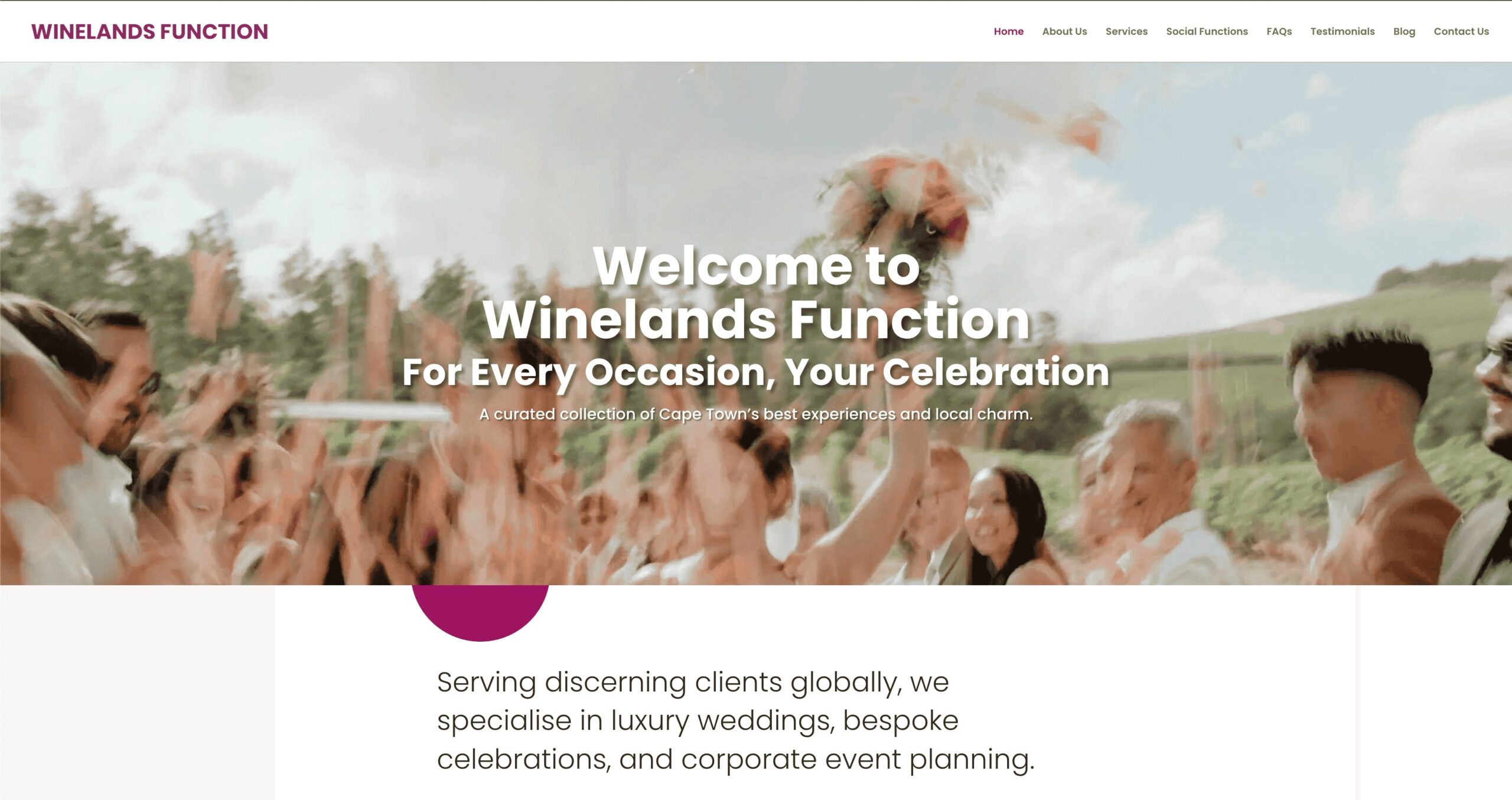
The proof anchors sit in the work itself. Explore the bespoke and luxury celebration services for the full scope of what’s on offer, or look through the event planning process explained step by step to see exactly how a brief moves from first conversation to opening night. Couples planning a wedding can also review the dedicated wedding planning service directly.
When you reach out, expect a discovery call first, where your lead coordinator listens to your brief in full before proposing a direction. That’s followed by a short checklist covering dates, guest numbers, venue and budget band, and a proposal timeline agreed upfront so you know exactly when to expect design concepts in your inbox. If you’re ready to start that conversation, begin your enquiry through the bespoke celebrations page and a member of the team will confirm your discovery call within days.
Where to read further and see the work
For readers who want to go deeper on the standards behind this article, these sources cover the effort, cost structures and selection criteria referenced above:
- Luxury event planning, on hours logged and staffing ratios at the luxury tier.
- Luxury vs. standard wedding planners: key differences explained, on fee structures at the high end.
- The insider’s guide to choosing a luxury event management agency, on the questions worth asking before you sign.
- How to choose a luxury wedding planner, on realistic planning timelines.
To see the coordination model in practice, explore Winelands Function’s approach to high‑end coordination steps or review how guest experiences are designed for luxury events.
Sources
- Luxury event planning
- Luxury vs. standard wedding planners: key differences explained
- The insider’s guide to choosing a luxury event management agency: 10 questions every brand should ask – Events Lab
- How to choose a luxury wedding planner: a comprehensive guide for high‑end celebrations – Today’s Luxury Weddings
Recommended
- Event Planning Coordinator: Crafting Luxury Experiences – Winelands Function – For Every Occasion, Your Celebration
- What a luxury event manager really delivers for you – Winelands Function – For Every Occasion, Your Celebration
- What a luxury event manager does: your hiring guide – Winelands Function – For Every Occasion, Your Celebration
- The role of event management companies in luxury celebrations – Winelands Function – For Every Occasion, Your Celebration